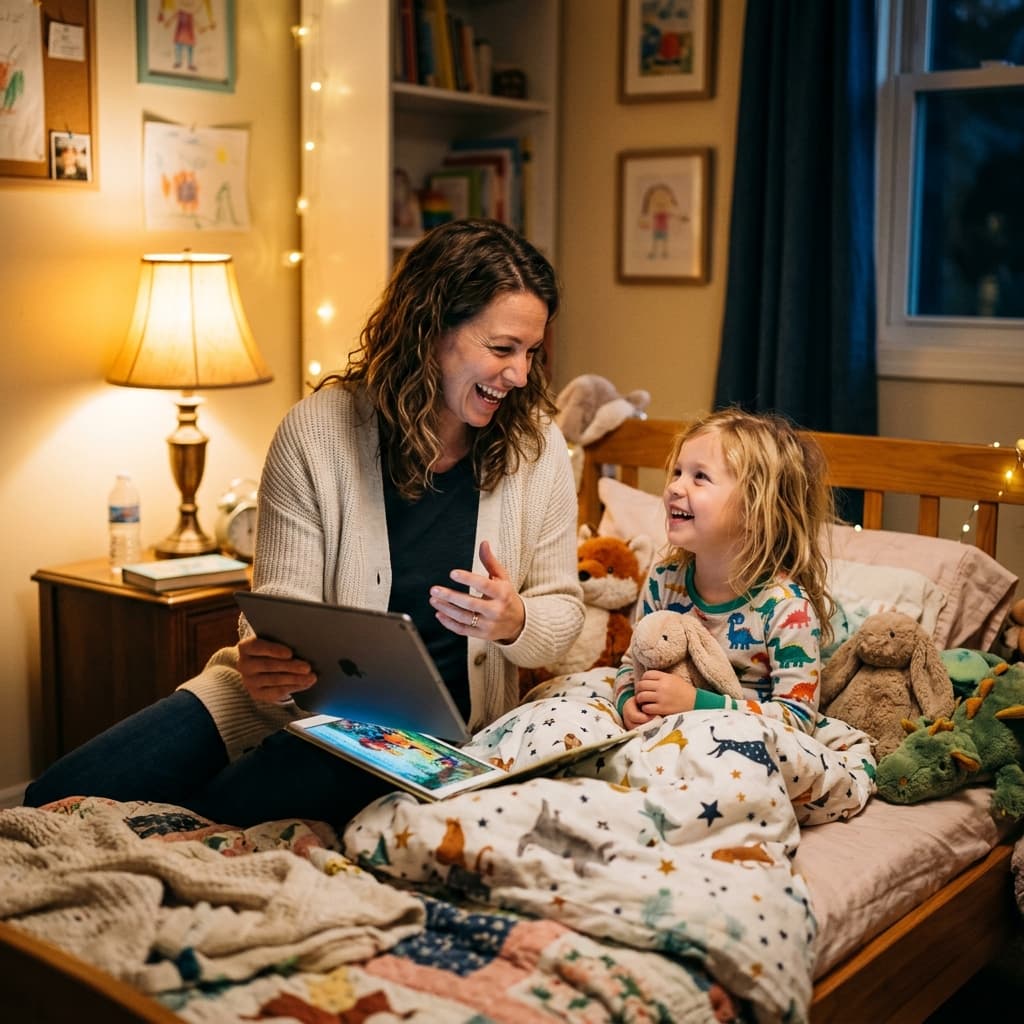
Picture this: you're reading a bedtime story, and you casually swap the character's name with your child's. Suddenly, their eyes widen. They sit up straighter. They're in the story now — not just listening to it.
That moment isn't just adorable. It's neuroscience in action.
What the Research Says
Neuroscience research, including studies published in journals like Brain Connectivity, has shown that when children hear their own name, a specific network of brain regions activates—areas associated with self-referential processing and social cognition.
In simpler terms: hearing their name in a story tells their brain, "This matters. Pay attention. This is about me."
This isn't minor. This is the difference between a child half-listening while fidgeting, and a child who is genuinely inside the narrative. This deep engagement allows them to better process moral lessons, empathise with characters, and build the cognitive connections that strengthen a developing brain.
The Empathy Accelerator
When children see themselves as the hero, they don't just follow the story — they feel it. If their character shows bravery in a dark forest, they process what bravery feels like. If their character shares a toy with a new friend, they mentally rehearse generosity.
Researchers call this "narrative transportation." The deeper a child is transported into a story, the more likely they are to adopt the values and behaviours of the protagonist.
And personalisation is the single most powerful lever for deepening that transportation.
No account needed. Your first story is free.
Children who regularly hear personalised stories show measurable improvements in empathy, emotional vocabulary, and problem-solving skills compared to those who listen to generic stories.
How to Use This Tonight
You don't need a neuroscience degree to apply this. Here are three practical ways to harness the Hero Effect at bedtime:
1. Mirror a real challenge. If your child is nervous about starting school next week, create a story where they bravely walk into a new adventure and discover it's wonderful. The story becomes a safe rehearsal space.
2. Include their real friends. Adding familiar names to the cast — their best friend, a cousin, even the family pet — deepens the immersion and makes the story feel like their world.
3. Let them choose the theme. Even giving a simple choice like "Do you want tonight's story to be about kindness or bravery?" gives them ownership over the narrative, which further increases engagement.
The Bedtime Advantage
Here's the beautiful thing: bedtime is already the most neurologically receptive time of day for children. Their brains are transitioning from active processing to consolidation — the exact state where emotional learning is most effective.
Combining a personalised story with this natural brain state creates a powerful one-two punch: deep engagement followed by deep processing during sleep.
It's not just storytime. It's brain training disguised as magic.
Ready to try it?
No account needed. Your first story is free.
Try It Free — Create Your Child's First Story