If bedtime in your house feels like negotiating a peace treaty — one more drink of water, one more trip to the loo, one more "but I'm not tired" — you're not alone.
The secret isn't discipline. It's transition design.
Children's brains don't have an off switch. They can't go from building Lego empires at full speed to lying quietly in the dark. They need a runway. And the good news is, that runway only takes about 10 minutes.
The 3-Step Runway
Think of bedtime as three gentle gear changes, not one sudden stop:
Step 1: The Dim (2 minutes) Lower the lights in the house. Not just the bedroom — start in the living room. This signals to your child's brain that the active part of the day is winding down. Melatonin production begins ramping up in dim light, so this tiny change does real biological work.
Step 2: The Transition (3 minutes) This is the "getting ready" bit — pyjamas, teeth, toilet. Keep it calm and predictable. Same order every night. Children's brains crave routine because predictability = safety. When they know exactly what comes next, resistance drops dramatically.
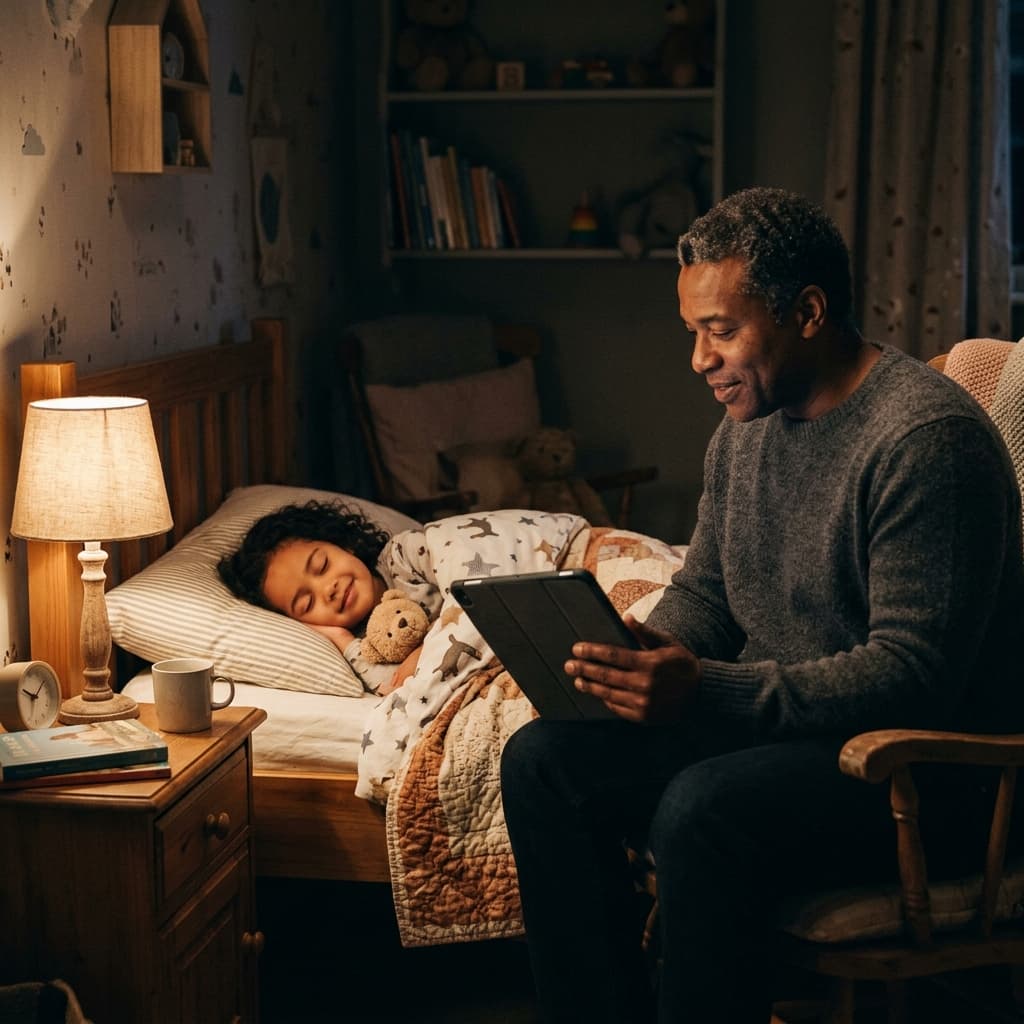
Step 3: The Story (5 minutes) This is the magic moment. Tuck them in, pull up tonight's story, and read together. The story serves as the final bridge between "awake world" and "sleep world." It gives their brain something gentle to focus on instead of the racing thoughts that keep them awake.
The anticipation of the story is just as powerful as the story itself. When children know a personalised adventure is waiting for them in bed, they want to get through Steps 1 and 2.
No account needed. Your first story is free.
Why 10 Minutes Works
You might think a longer routine would be better, but many sleep experts suggest otherwise. Overly long routines can create more opportunities for negotiation and stalling. A tight 10-minute window creates gentle urgency without stress.
The key is consistency, not duration. A short routine done every single night will outperform a long routine done sporadically.
The Secret Ingredient: Anticipation
Here's a bonus trick that transforms the entire dynamic: let your child choose the theme of tonight's story during dinner.
"Would you like a story about an underwater adventure or a trip to the stars tonight?"
Now bedtime isn't something that happens to them — it's something they're actively looking forward to. The whole evening shifts from resistance to anticipation.
By the time they're in their pyjamas, they're practically racing to bed. Not because you told them to, but because their story is waiting.
Ready to try it?
No account needed. Your first story is free.
Try It Free — Create Your Child's First Story